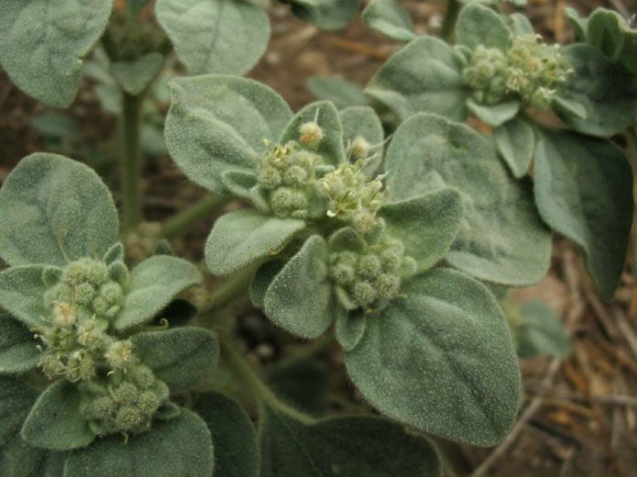
My “Leftover” post written at the height of the Covid pandemic has an update. In November 2021, I wrote about a plant that I could not identify but marveled at its ability to transport me from what was a terrible day to one that turned good. I recently went on a walk with someone knowledgeable about the land where I described a “fluffy cute Germander-like ground cover plant.” My companion very quickly said, “Oh, that is Turkey Mullein” to my delight. I felt lucky to have a moment with someone who not only notices plants but learns their names.
The California Native Plant society’s Calscape website says this about it:
“Croton setigerus (formerly Eremocarpus setigerus) is a species of plant known by the common names doveweed and turkey mullein. It is native to western North America and naturalized elsewhere, including parts of Australia. This is a squat plant with furry, felt-like, heart-shaped leaves, pale gray green in color. The small green flowers are covered in soft bristles. This is sometimes kept as an outdoors houseplant as it is low and rounded and fills a pot nicely. The foliage is toxic to animals, and the crushed plants were used by Native Americans to stupefy fish and make them easy to catch. The seeds are very palatable to birds, however; the common names of the plant come from the affinity of doves and Wild Turkeys for the seeds.“
https://calscape.org/loc-california/Croton%20setiger()
I love that Doves and Wild Turkeys love this plant. They are the interlocutors of this mountain landscape. While their presence is seen and heard everyday, who knew that they are nourished by this magical-looking plant.
 ilikebotanicals
You must be logged in to post a comment.